
The global financial stage is dominated by the roar of the US dollar or the euro, yet in the quiet, azure expanse of the South Pacific, a unique and resilient currency operates with dignified simplicity: the Vanuatu Vatu (VUV). More than just a medium of exchange, the Vatu, meaning ‘stone’ in several local languages, is a foundational symbol of the island nation’s sovereignty, cultural heritage, and economic self-determination. Understanding the VUV offers a compelling look at how a small island economy maintains stability and identity in a globalized world.

Key Facts: The Distinctive Structure of the VUV
The Vanuatu Vatu stands apart from nearly every other major world currency due to its most defining feature: it is non-decimal.
Unlike the dollar, the pound, or the euro, the Vatu is not subdivided into smaller units like cents or centimes. When the Vatu was introduced, it was issued as a single, indivisible unit. This non-decimal structure simplifies local cash transactions and reflects the practical needs of a cash-heavy economy where price fluctuations are typically handled in whole Vatu amounts.
- ISO Code and Symbol: The currency’s international code is VUV, and it is commonly represented by the symbol ‘Vt’.
- Issuing Authority: The Reserve Bank of Vanuatu (RBV) is the central bank responsible for regulating and issuing the Vatu, playing a vital role in maintaining monetary stability and managing foreign exchange reserves.
- Denominations: The VUV is issued in both coins and banknotes.
- Coins are found in denominations of Vt1, Vt2, Vt5, Vt10, Vt20, Vt50, and Vt100.
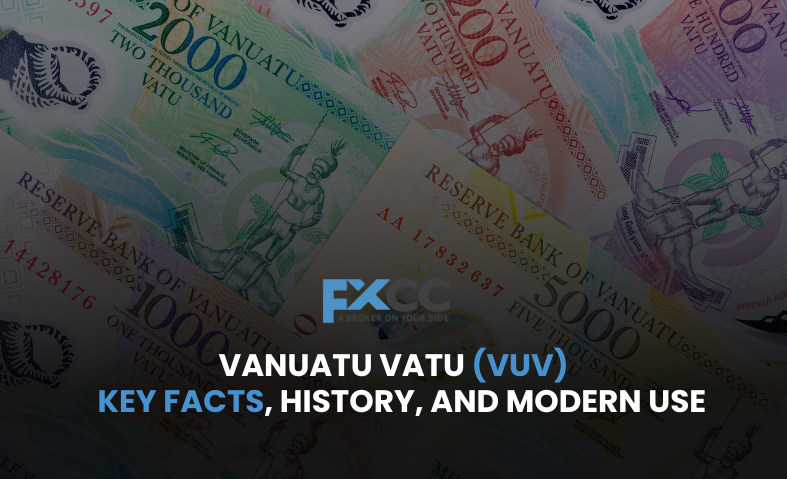
- Banknotes are available in Vt200, Vt500, Vt1,000, Vt2,000, Vt5,000, and Vt10,000. These notes are renowned for their vibrant colors and detailed imagery, which often showcase the nation’s rich cultural heritage, unique flora and fauna, and national landmarks, turning each note into a miniature piece of national art.
- Cultural Reference: For ease of reference, particularly in tourist areas or when discussing larger transactions, locals often use a shorthand where 100 Vatu is colloquially referred to as “one dollar,” harkening back to a period when the Vatu’s exchange rate was historically close to Vt100 per $1 USD.
A Journey to Sovereignty: The Vatu’s History
The story of the Vatu is inextricably linked to Vanuatu’s path to independence, reflecting a deliberate step away from its colonial past to forge its own economic identity.
The Colonial Legacy
Before 1981, the islands, then known as the New Hebrides, were administered as a unique Anglo-French Condominium. This joint rule, which began in 1906, meant that the territory was served by two currencies: the Australian dollar (AUD) and the New Hebrides franc. This system, with its dual administration and dual currency, was a complex symbol of colonial influence.
Birth of the National Currency
Full sovereignty was achieved on July 30, 1980, when the Republic of Vanuatu was founded. As a crucial act of national consolidation and economic autonomy, the Vatu was formally introduced in 1981, replacing the New Hebrides franc at par.
The adoption of the Vatu was a symbolic gesture, signifying that the newly independent nation had taken full control of its fiscal destiny. By choosing a local word, “Vatu,” for the currency’s name, the new government underscored the importance of indigenous culture and values in its national identity.
Evolution of Physical Currency
Following its introduction, the currency system continued to evolve. Initially, the Central Bank of Vanuatu introduced notes in denominations of Vt100, Vt500, and Vt1,000. In a move common among central banks to increase the lifespan and utility of frequently-used denominations, the Vt100 note was later withdrawn from circulation and replaced by a Vt100 coin in 1988. This practical management ensures the currency remains durable and efficient for daily use across the archipelago.
Modern Use and Economic Role
The Vatu is the engine that drives Vanuatu’s small, diverse, and often vulnerable economy, which is heavily reliant on key sectors.
Daily Transactions and Local Economy
In daily life, the Vatu is the undisputed king. It is the mandatory means of exchange throughout the archipelago, from the capital of Port Vila to the most remote outer islands. Its limited international presence is a calculated feature, as it shields the Vatu from the speculative whims of major foreign exchange markets, contributing to its relative stability.
- Tourism: This is a vital economic pillar for Vanuatu, drawing thousands of visitors from Australia, New Zealand, and beyond. Foreign currency brought by tourists must be converted into Vatu, creating a constant, if seasonal, flow of foreign exchange reserves. In major tourist hubs, currencies like the Australian Dollar (AUD) are occasionally accepted, but the Vatu remains the preferred and legal medium.
- Agriculture: As a cornerstone of the rural economy, agriculture—including the export of commodities like copra (dried coconut meat), cocoa, and kava—relies solely on the Vatu for local transactions and payments, linking the currency directly to the livelihoods of the majority of Ni-Vanuatu people.
- Offshore Financial Services: Vanuatu has a presence in the offshore finance sector, which brings in foreign revenue, although the day-to-day operations still cycle back to the domestic Vatu-based economy.

The Challenge of Stability
The Reserve Bank of Vanuatu manages the Vatu with a focus on stability over aggressive growth. While the VUV is not formally pegged to any single major currency, the RBV’s policies aim to keep its exchange rate relatively stable, particularly against the Australian and New Zealand dollars, which represent major trade and tourism partners.
The Vatu’s limited liquidity on major international forex exchanges is not a sign of weakness but rather a conscious measure of protection. However, as a small island developing state, the Vatu’s value and the broader economy are highly susceptible to external shocks, such as global economic slowdowns and, most notably, the devastating effects of frequent tropical cyclones, which can inflict immense damage on the infrastructure supporting Vatu-based commerce.
In conclusion, the Vanuatu Vatu is an exceptional currency. Its non-decimal structure is a curiosity in modern finance, but its true significance lies in its role as a quiet custodian of national identity and economic resilience. The VUV allows Vanuatu to conduct its affairs with simplicity and dignity, balancing the need for monetary stability with the imperative to reflect its unique Melanesian culture. The Vatu truly embodies the national spirit, operating as a small yet significant rock of stability in the vast Pacific Ocean.